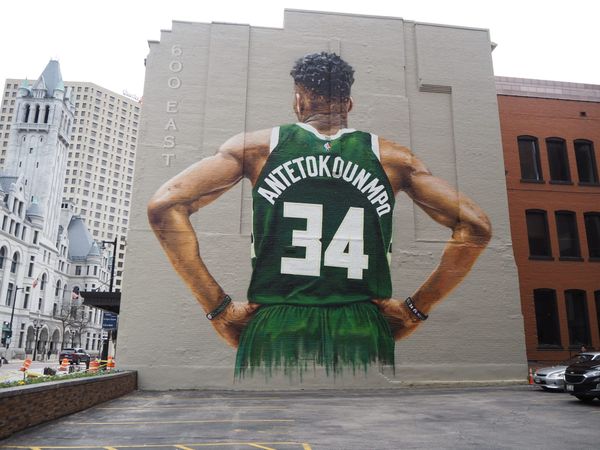
RIP Don Nelson, 1940-2026
Don Nelson changed the game in the way it is now played and the way we talk about the game itself. Small ball, point forwards, stretch fives — Nelson’s fingerprints are all over it.
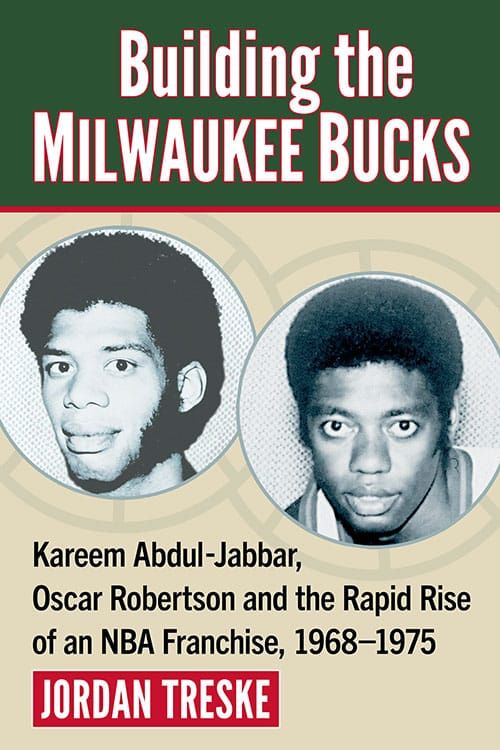
(Editor’s Note: In light of Don Nelson’s passing, I wanted to share a passage from my still-in-the-works follow up to ‘Building the Milwaukee Bucks: Kareem Abdul-Jabbar, Oscar Robertson and the Rapid Rise of an NBA Franchise, 1968-1975. Nelson obviously is a central figure in telling the story about the Bucks teams that emerged under his watch in the late 1970s and throughout the 1980s. It’s very possible that what exists on the page now might not look the same way in the future, just to be clear.
If you enjoy this kind of open-source writing, please let me know by commenting and even subscribing to Milwaukee Hoops History. And if you happen to work for a book publisher, don’t hesitate to reach out either).
Donald Arvid Nelson was born on May 10, 1945 to Arvid and Agnes Nelson. Originally born in Muskegon, Michigan, the Nelsons moved to Rock Island, Illinois where they owned and operated a chicken farm. He fell in love with the game of basketball after fashioning a makeshift basket made of bicycle spokes on a shed. At every turn, Nelson downplayed his own basketball abilities as a player. But what Nelson may have lacked in top end speed and athleticism, he made up for in general guile and knowhow that made him an indispensable piece for Boston Celtics head coach Red Auerbach. His playing resume speaks for itself. 14 NBA seasons — 11 of which were played with the Celtics. When he joined the Celtics for the 1965-66 season, he hopped on near the end of their dynastic run during the Sixties. In total, Nelson won five NBA championships while wearing Celtic green and went out on top when Boston conquered the Phoenix Suns in the 1976 NBA Finals. By the time he was named the head coach of the Bucks, the Celtics announced plans to retire Nelson’s no. 19 jersey, which was eventually done on December 16, 1976 before the Celtics faced off against the Bucks. It was done only a couple of weeks into Nelson’s tenure, but the honor still left Nelson dumbfounded. “Having my number retired was the biggest individual thing that ever happened to me because it was unexpected. The thing I’m trying to do here is go back to Red Auerbach’s style of instilling confidence in all my players. I’m trying to be straightforward with everybody, the way Red was.”1
Playing in Boston for as long as Nelson did gave him a first-hand look at what made the Celtics different than any other team in the NBA. That was certainly due to the outsized influence of Auerbach, first as a coach and then as a general manager. When Nelson took over the Bucks just 18 games into the 1976-77 season, he looked at the very tenets of the Celtics teams that he was a part of. What made Nelson’s fast climb up the coaching ladder even more stunning was that he didn’t seek to become a coach to be his post-playing career. In fact, he wanted to become the first player to become an NBA referee. As he later told Steve Aschburner of the Milwaukee Journal in a profile piece written in 1985, Nelson thought he had the right temperament to become an NBA official. “It just made sense to me. I was an ex-player. I knew the game, I had a feel for it, I thought I had the temperament. I was only thrown out of one game as a player. So it was a logical thing.”2 Oh, if Nelson would have only known how he would lay into officials during games in the years to come — to the point that there was a swath of fans based out of Manitowoc, Wisconsin that called themselves, ‘Nellie’s T Club.’
Nelson went to great lengths to ingratiate himself into the world of officiating. He talked with NBA commissioner Walter Kennedy and Hall of Fame referee, Earl Strom. Nelson devoured the league’s rule book and went on to test himself during the Los Angeles Summer League, which was a much more primitive version of the Summer League we see today during the offseason. It was after working 10 games as a ref that Nelson began to have doubts about whether he’d make the cut in the eyes of the league. Nelson reached out to his old Celtics roommate Wayne Embry to air his doubts as Embry later wrote in his remarkable 2004 tell-all autobiography, The Inside Game: Race, Power, and Politics in the NBA, “The biggest disappointment in the summer league was Nellie’s performance as a ref," Embry co-wrote. "He struggled mightily, and he admitted to me over a couple of beers that he was failing in his bid to become the first player to referee. After several hours of chitchat and laughs, and a few more beers, he asked me again about playing and again I told him no. “Big man, I’m scared,” he said. “What am I going to do? The only thing I know is basketball. Can’t you help ol’Nells?” he asked, slurring his words. A lightbulb went off in my head. I was feeling sorry for him and wanted to help my old roomie. “We’re looking for an assistant coach,” I told him. Would you be interested in that?”3
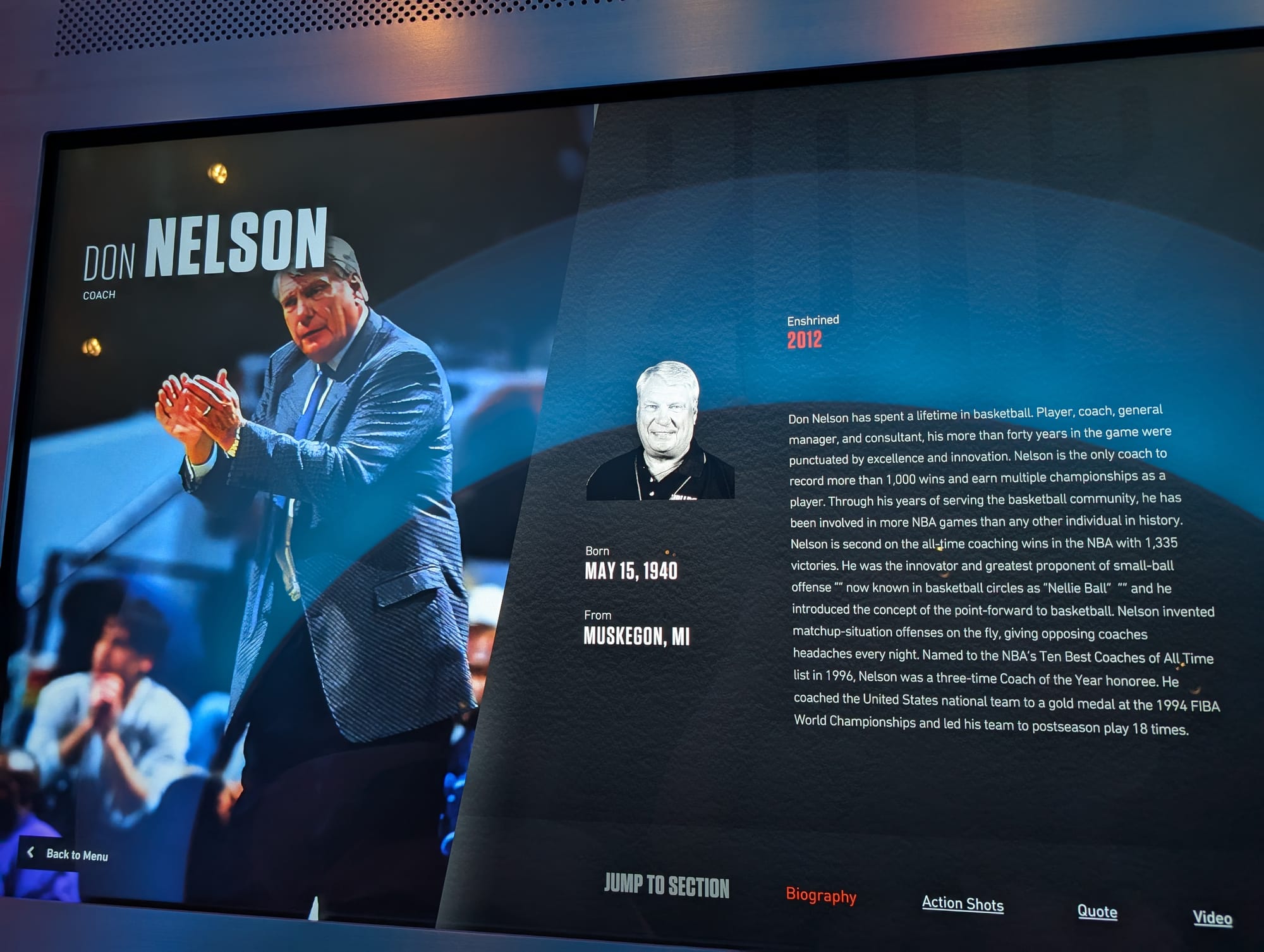
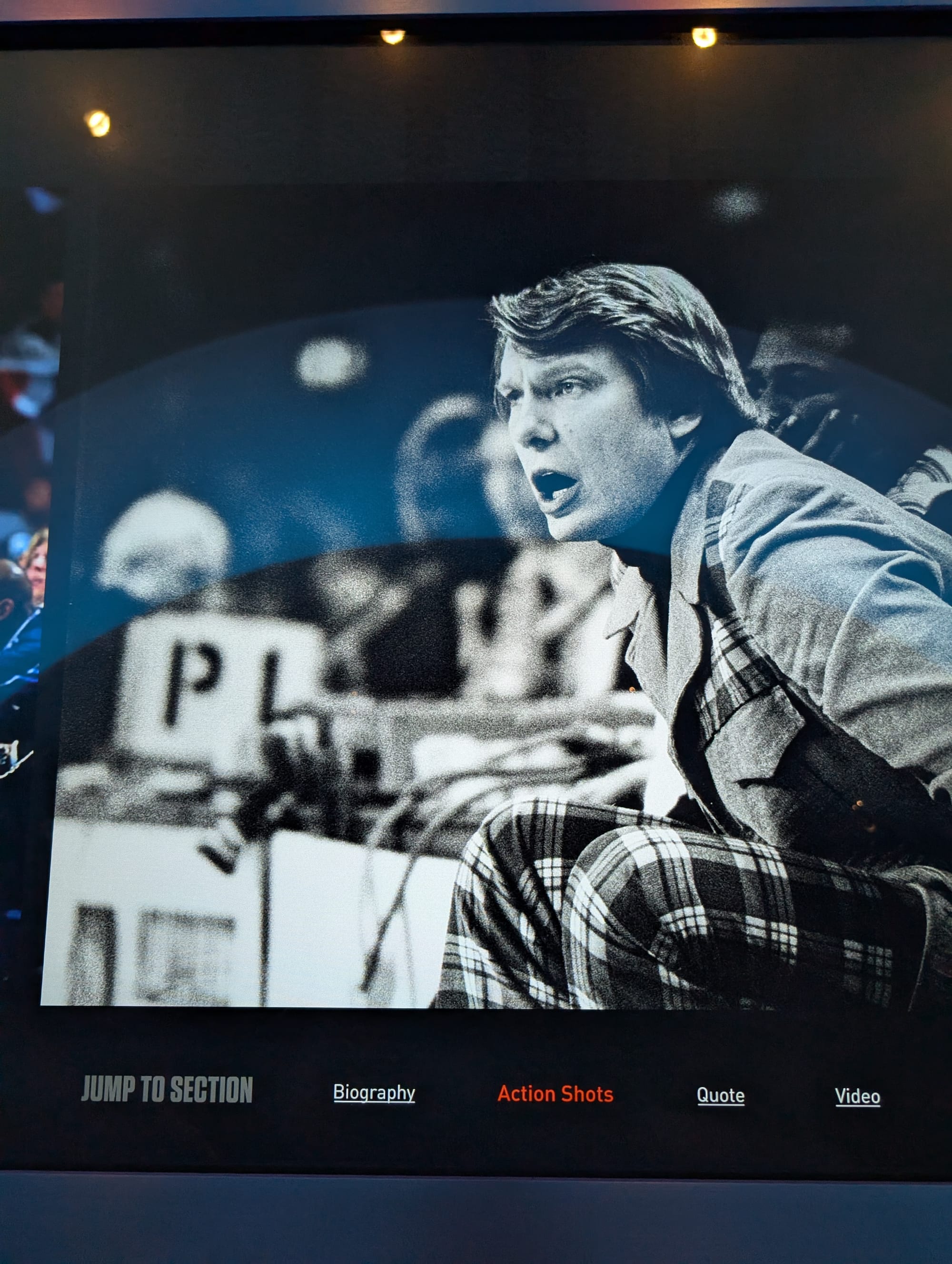
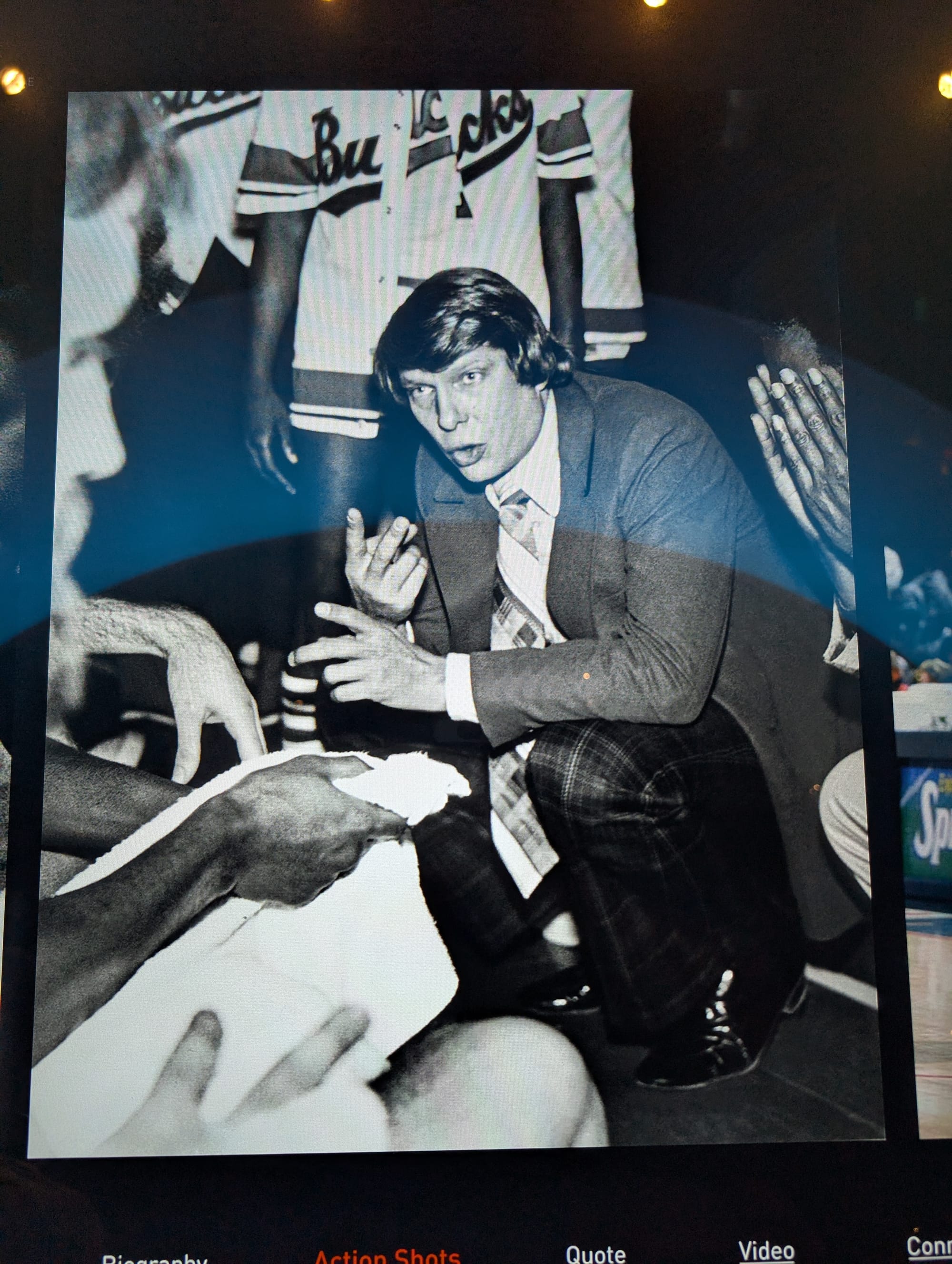
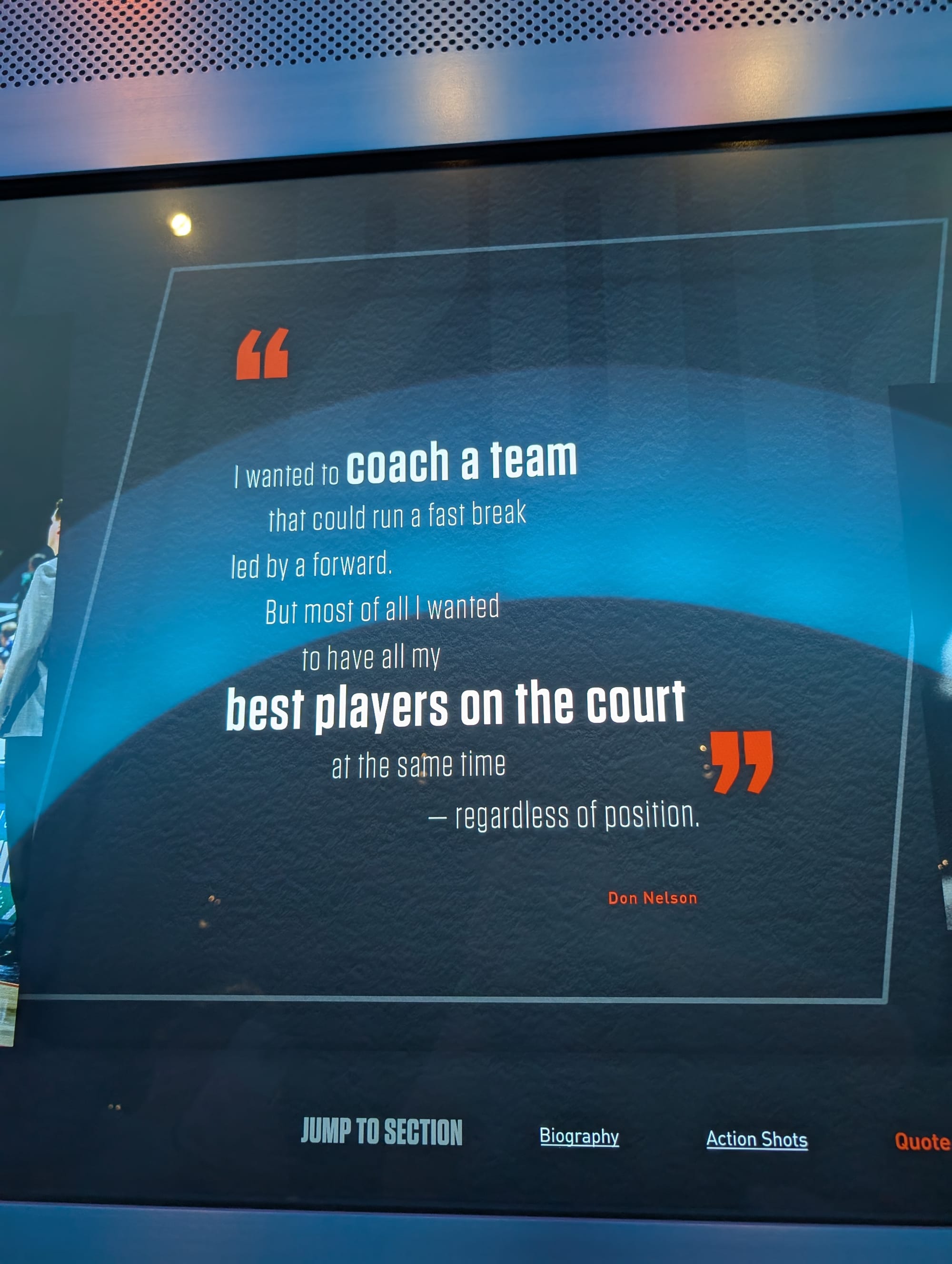
Photos of Don Nelson come courtesy of his interactive profile at the Naismith Basketball Hall of Fame in Springfield, Massachusetts. Photo credit: Jordan Treske
As he further detailed, Embry knew that Bucks players — both the young and developing crop of prospects that they had drafted and accrued through the Abdul-Jabbar trade and the experienced holdovers — were tuning out Costello’s domineering style. What he saw in Nelson was someone that could bridge the gap between the players and Costello, considering he was fresh off of being a player himself. Nelson jumped at the chance to become Costello’s assistant and it was agreed upon a week later when Costello, Embry and Nelson all met. From then on, Nelson had his coaching plan mapped out as he recalled later with Aschburner. “What I wanted to do was spend two years under Larry Costello, and then pick another head coach, someone I respected — Jack Ramsay, John MacLeod, two or three others — and learn from another system for a couple of years. Then get a head coach’s job, after four or five years.”4 Those two years under Costello turned out to only be more than two months.
The night of November 23, 1976 saw Costello reluctantly wave the white flag. The resignation of Costello was not well-received among both Bucks fans and the Milwaukee press corps. It was even voted on as the biggest sports story in Milwaukee for 1976 by members of the Associated Press sportswriters and broadcasters. The years of disrespect Costello received from Bucks management — in the middle of its own transformation — had radicalized both the most dedicated Bucks fans, season ticket holders and the beat writers and columnists for both the Journal and Sentinel. Costello fought for any sort of job security since Kareem had left town. Petitions were organized and signed and standing ovations were held by members of the Bucks faithful to honor the embattled coach. Embry recalled all of that in the lead up to their combined resignation. “Trading Kareem was well received, all things considered. Firing Larry was going to be the most controversial event in the team’s history. He was very popular among the grass roots fans in Milwaukee. He was one of them. He represented all that was good in people — morality and integrity. So what if he was not a fashion plate? White socks with blue suits were accepted in Milwaukee. So what if he wore a crewcut when everybody else was wearing long hair? Under his leadership. The Bucks treated their fans to an NBA championship and a Western Conference title in six years. The team was a contender every year after their inaugural season. He was an excellent coach and human being, and he deserved a chance to rebuild. But I was not going to be able to give him that.”5
Costello never apologized for being diligent and always pushing for perfection, even as Bucks teams increasingly didn’t have the talent to do so. Bucks players bristled at the way they never could figure out their fast break offense or the convoluted defensive scheme. But they saw how Costello wanted to fix their sliding start before it ended his time with the Bucks for good. Said Bob Dandridge at the time — not a favorite of Costello’s by any stretch of the imagination — “Larry showed me a lot of character the last couple of days in the face of everything negative that had been said, especially when we went on the road and lost four games. He worked just as hard as before.”6 An unnamed Bucks player even said of Costello being recognized for what he brought to the franchise after stepping down, “It’s like a person not receiving any flowers until he’s gone.”6
Nelson knew the job he was inheriting and the challenges that laid ahead. So did those closest to the team that followed their every move. It’s perhaps here why Nelson was incredibly self-effacing on the night that officially kickstarted his coaching career. As Costello and Embry stood before the podium sharing their resignations in that press conference held at the Milwaukee Athletic Club, Nelson was dour and he couldn’t help but bare it all when it was his turn at the microphone. “Truthfully, I feel unprepared for this job. I had expected to be an assistant coach for at least two years. Larry and I went into this season as a partnership, and I still feel that way. I should probably shoulder as much blame as Larry.”7 Despite Nelson’s feelings, there was no one else that Fitzgerald considered for the job. In fact, Nelson was installed as the Bucks’ next coach on a permanent basis and he and Fitzgerald did so under a handshake agreement.
Expectations were certainly not high of Nelson’s ability to turn the ship around for the rest of the 1976-77 season. Take the words of longtime Milwaukee Journal columnist and former Bucks beat writer Bob Wolf just days after Nelson took over as head coach. “But there simply isn’t enough talent for more than an occasional victory, and the unfortunate man in the middle is Nelson, who didn’t consider himself ready for the job in the first place,” wrote Wolf. “Nelson wanted so badly to get his feet wet as an assistant coach that the Bucks had to talk him into succeeding Costello. It would be a shame if he had to take a quick bath instead.”8 As Nelson assumed the responsibilities of being a head coach in the NBA, early profiles focused on just Nelson’s simple, Midwestern farm boy nature, an act surely heightened by his early insecurities as a coach. An early profile on Nelson written by Jim Cohen of the Milwaukee Journal included an anecdote where Nelson was diagramming a play called ‘Indiana’ in the Bucks’ locker room — only he couldn’t spell the word. “I was never too good in spelling. God, I haven’t written on a blackboard like this for a long time.”9 Being as green as they come, Nelson enlisted the help of K.C Jones, his former Celtics teammate, to act as his lead assistant as he looked to carry out the rest of that season in Milwaukee. This was how Don Nelson’s legendary NBA coaching career began and these rather inauspicious beginnings were truly befitting of the man who did things his own way. –
(Sidenote: You can find footage of the press conference where Nelson takes over for Costello through the University of Wisconsin-Milwaukee’s WTMJ news archive page. Revel in the accidental drop of Boston’s “Foreplay/Long Time” as Costello is pouring his heart out.)
Throughout his five decades in the NBA, whether as a player, coach, general manager, director of player personnel and minority owner, Don Nelson was authentically himself. It was especially true of his 11 years spent in Milwaukee where his Midwestern roots delightfully fit within the city’s small town charms. He was the foil to Pat Riley during his days leading the Los Angeles Lakers while wearing his Giorgio Armani suits like a prototype to Gordon Gecko. Meanwhile, Nelson wore fish ties and defied the NBA’s coaching attire policies. He drove tractors and raised a successful fund to help struggling farmers across the state of Wisconsin. Nelson was a fun loving, beer drinking regular guy who wore his heart on his sleeve and dug into the work at all costs. He felt at ease drinking at bar rooms like Major Goolsby’s compared to schmoozing in board rooms. He held true to his handshake agreements with Fitzgerald until he sold the team before Herb Kohl got Nelson’s signature on a written contract. There are many more of those anecdotes, but it’s the tip of the iceberg for what made Nelson tick.
Nelson wore every defeat greater than every victory and there sure were many of them — to the point where Nelson once reigned as the NBA’s all-time leader in coaching wins. And in Milwaukee, I feel confident that no one will come close to touching Nelson’s franchise records for games coached (880) and 534 wins. Truth be told, the kind of longevity that Nelson was afforded in Milwaukee doesn’t exist for the modern NBA coach. He certainly didn’t face it in his stints coaching the Golden State Warriors – twice — the Dallas Mavericks and the New York Knicks. The fact that he never won the big one as coach loomed over his coaching resume that very likely wouldn’t stand today for someone in a similar position. Hell, look at some recent championship coaches like Mike Budenholzer or Michael Malone and they would agree. The coaching business has become as cutthroat as all hell with how the league’s owners view the position.
That’s what I keep coming back to the more I read about Nelson and the more I shape my writing around his Bucks teams. The fact that Nelson was able to leave the Bucks under his own terms — under plenty of internal conflict between himself and Kohl — just would not happen now. The power is in the owners and not the coaches.
What Don Nelson did to change the game of basketball and his influence on the modern NBA. He was an incredibly forward-thinking coach that did everything to put his team in the best position to succeed. Nelson changed the game in the way it is now played and the way we talk about the game itself. Small ball, point forwards, stretch fives — Nelson’s fingerprints are all over it. Not for nothing, Nelson gets lost in the shuffle for how the game evolved defensively as well, especially in how predominant switching and zone defenses have become to NBA coaches. Nelson was incredibly competitive and a bright strategist that developed his own brand of system basketball, all starting in Milwaukee on that cold November night in 1976. Had Nelson not reluctantly accepted to take over the reins from the departing Costello, it’s hard to know just how different that would have been for his own coaching journey. It was a case of Nelson being in the right pace at the right time and Costello made mention in his resignation speech that he hoped that Nelson was afforded as much time as he was given in Milwaukee.
As it turned out, Nelson earned even more time than Costello could have predicted and the Milwaukee Bucks are still standing today because of it. Rest in peace, Coach.
Footnotes:
1 "Number Up: Cowens Shows Up in Boston for Nelson's Party," Milwaukee Journal. December 16, 1976.
2 Steve Aschburner, "Nellie's future was official," Milwaukee Journal. January 23, 1985.
3 Wayne Embry with Mary Schmitt Boyer. The Inside Game: Race, Power, and Politics in the NBA. (Akron: The University of Akron Press, 2004). 254.
4 Steve Aschburner, "Nellie's future was official," Milwaukee Journal. January 23, 1985.
5 Wayne Embry with Mary Schmitt Boyer. The Inside Game: Race, Power, and Politics in the NBA. (Akron: The University of Akron Press. 2004). 256.
6 Lou Chapman, "Players Say Larry Didn't Run Enough," Milwaukee Sentinel. November 24, 1976.
7 Jim Cohen, "Costello Quits, Coup Complete," Milwaukee Journal. November 23, 1976.
8 Bob Wolf, "Time to Shed Tears for Nelson," Milwaukee Journal. November 30, 1976.
9 Jim Cohen, "Nothing Complex About Bucks' Nelson," Milwaukee Journal. November 24, 1976.